Optics
A 203 mm aplanatic tube.
A Celestron EdgeHD: mirrors and a corrector folded into a short tube, with a field flat enough for an APS-C sensor.
The instrument
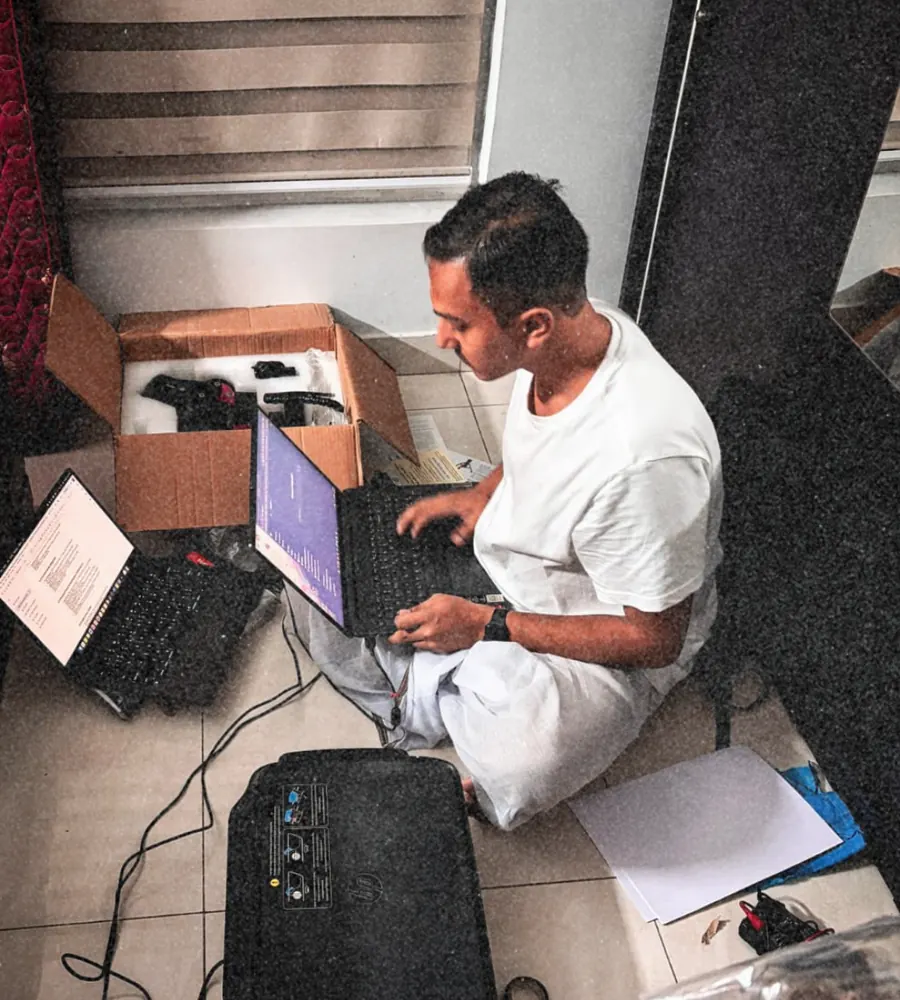
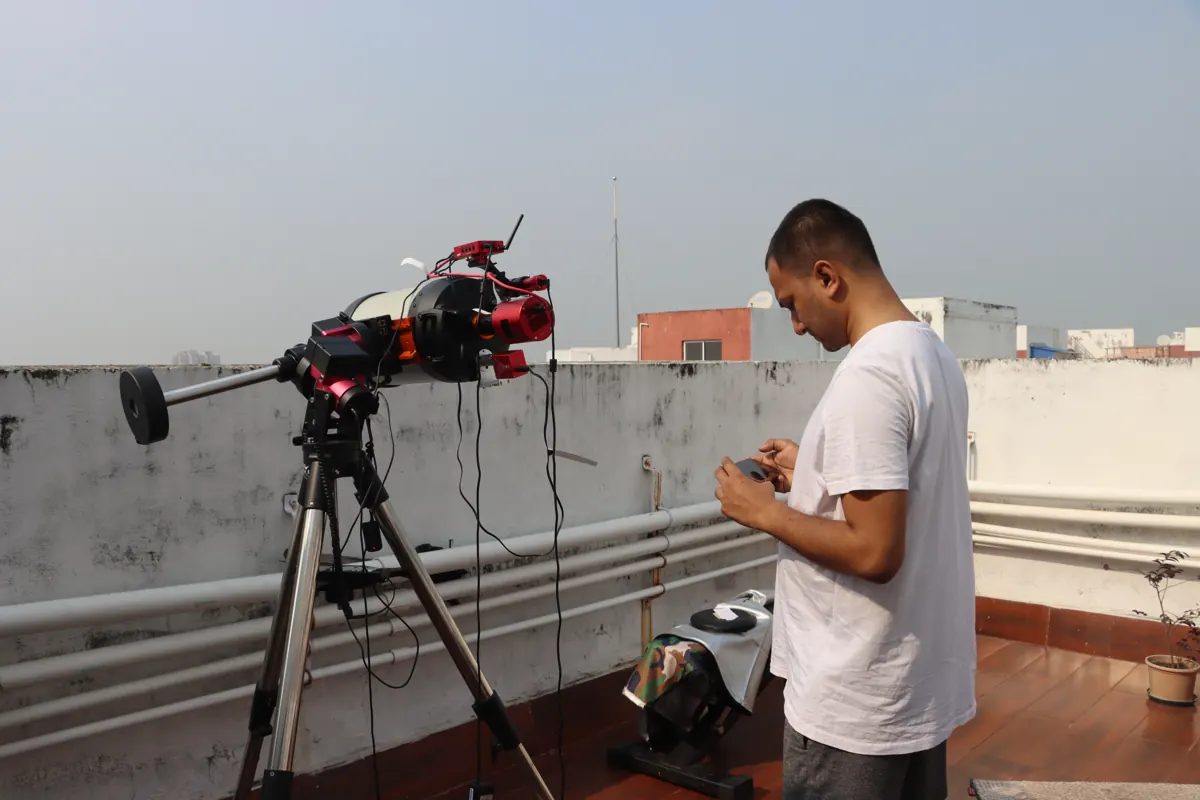
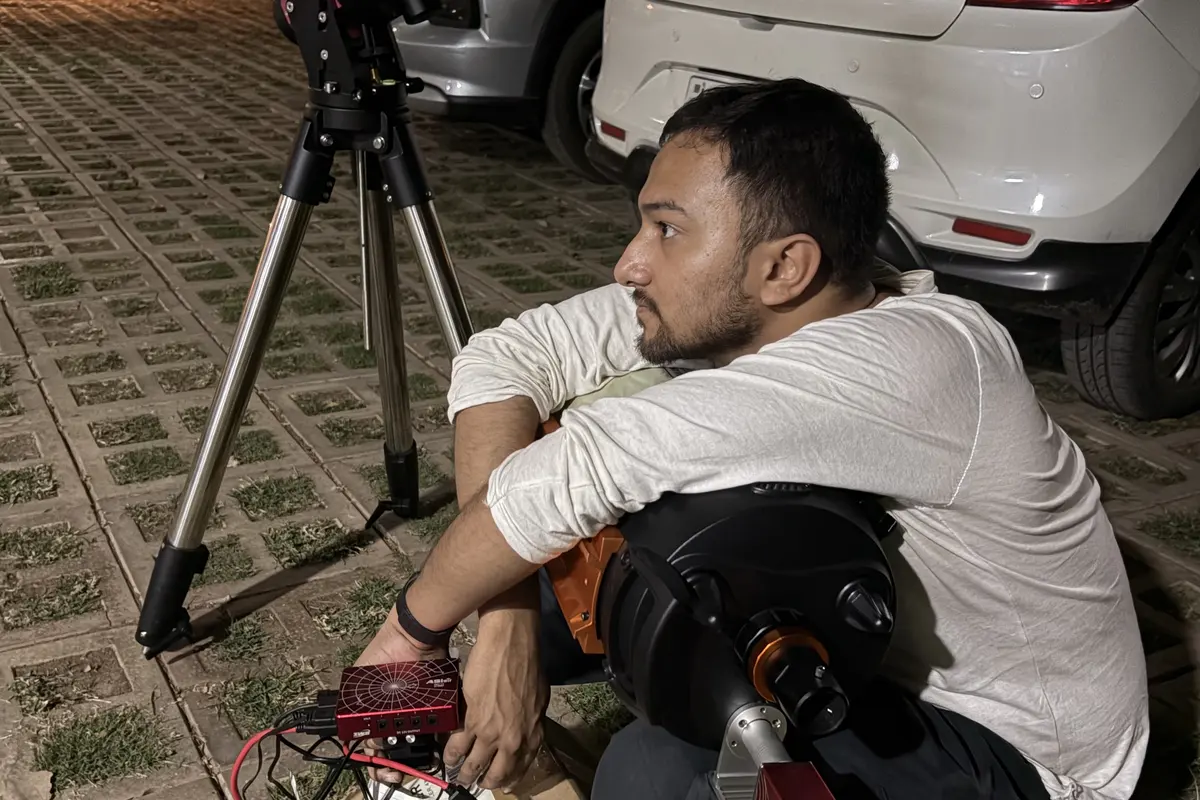
Purākaash is a catadioptric telescope on a tracking mount, with a cooled camera, a guide scope and a small computer that runs the session. The parts come from several makers. Our work is making them behave as one instrument.
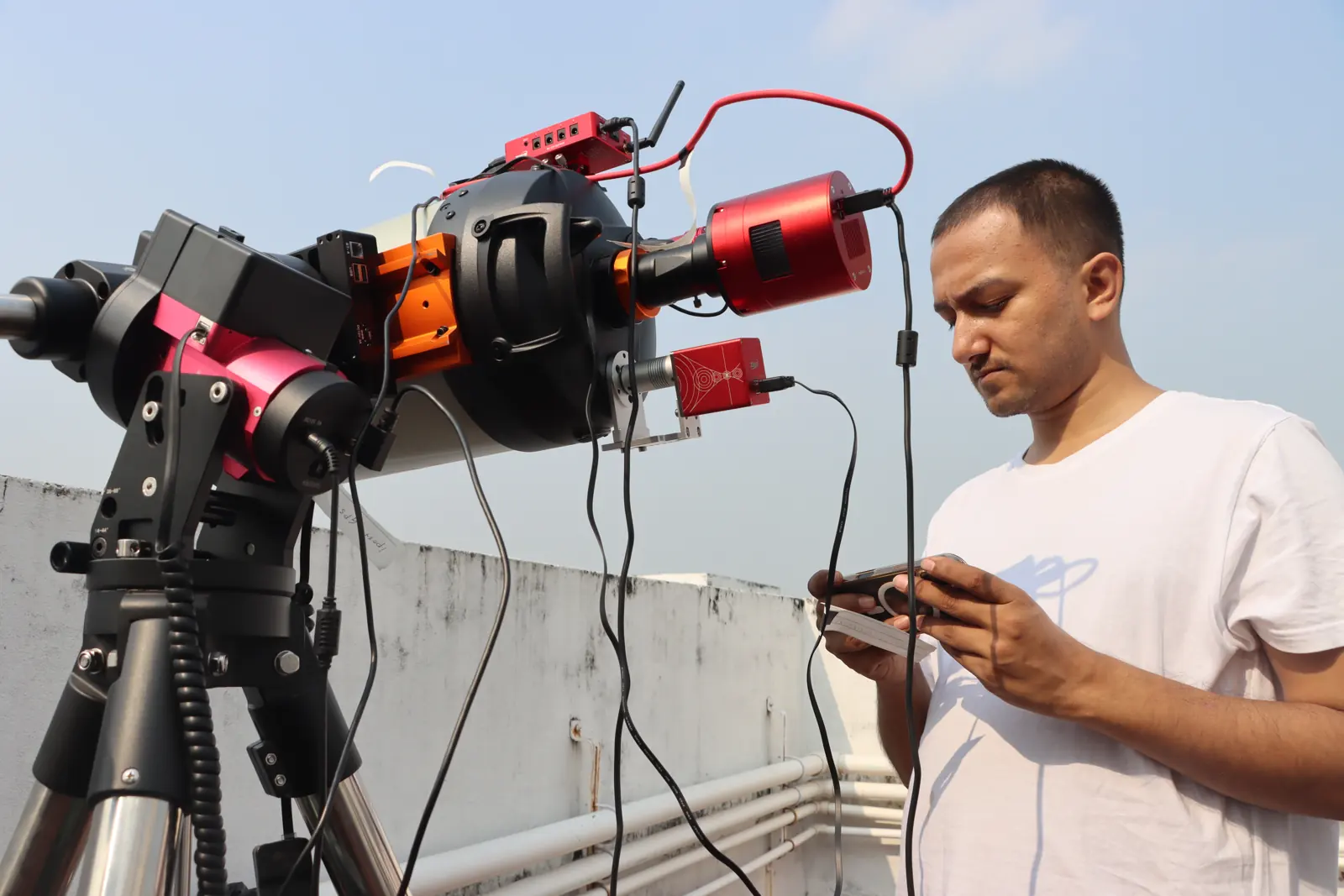
This is a completed instrument-integration example, not a claim of independently certified performance or in-house manufacture of every component.
What is in it
Optics
A Celestron EdgeHD: mirrors and a corrector folded into a short tube, with a field flat enough for an APS-C sensor.
Mount
An iOptron equatorial mount on a steel tripod turns against the Earth’s rotation, so a faint object stays on the same pixels through a long exposure.
Camera and filters
A cooled CMOS camera with H-alpha and O III filters. They pass only the light that glowing gas emits, which is how a nebula can be imaged through a city’s skyglow.
Guiding and control
A guide scope watches one star and corrects the mount. A ZWO ASIAIR controller handles plate solving, autofocus and FITS capture, and a dew heater keeps the optics clear.
What we added
Our own software integration brings the mount, cameras, guiding, focusing and imaging into one repeatable workflow, so a night’s work can be done the same way twice.
Purākaash also carries an AI guide. It explains how to set up, align, focus and operate the telescope, and why each observing choice is made, in English and Bengali. The aim is that a student can learn the instrument by using it.
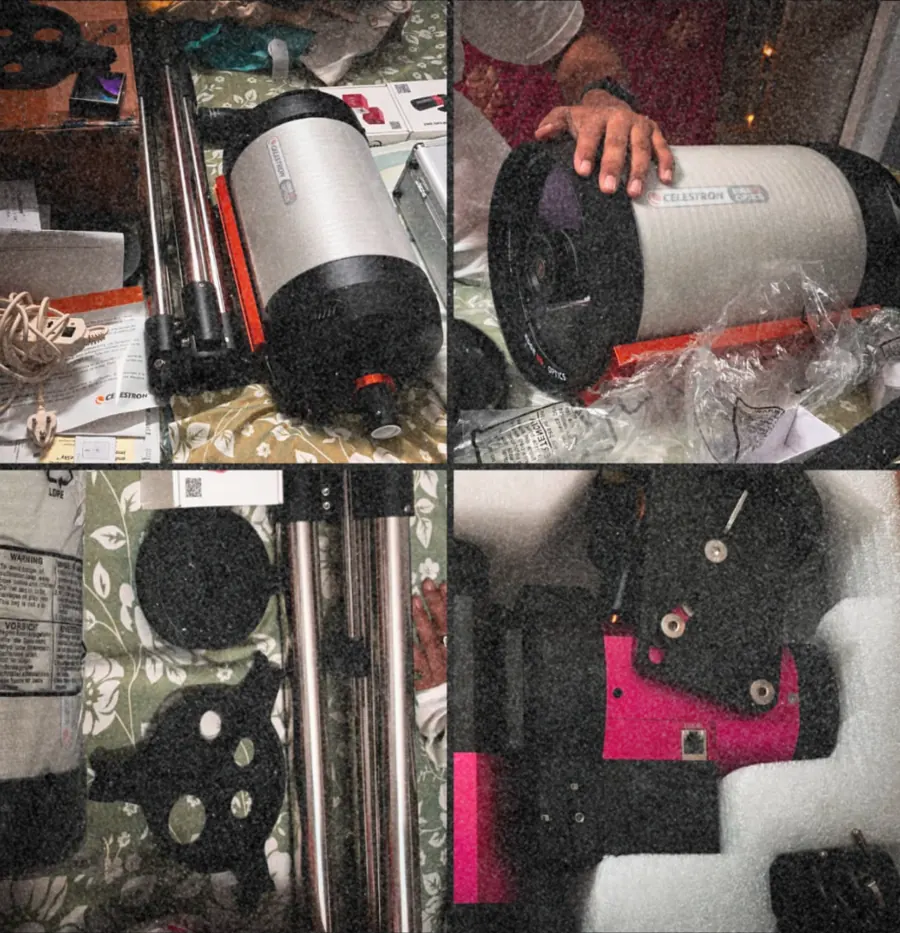
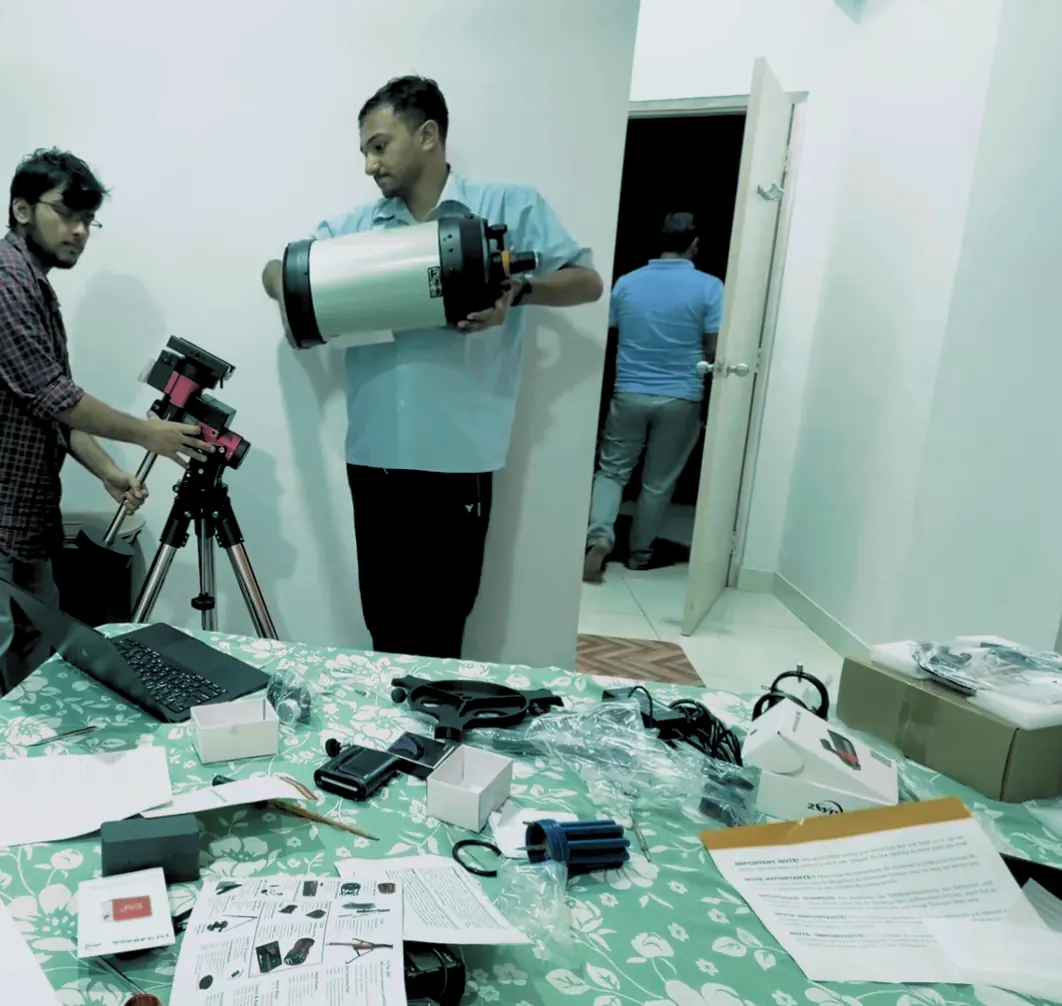
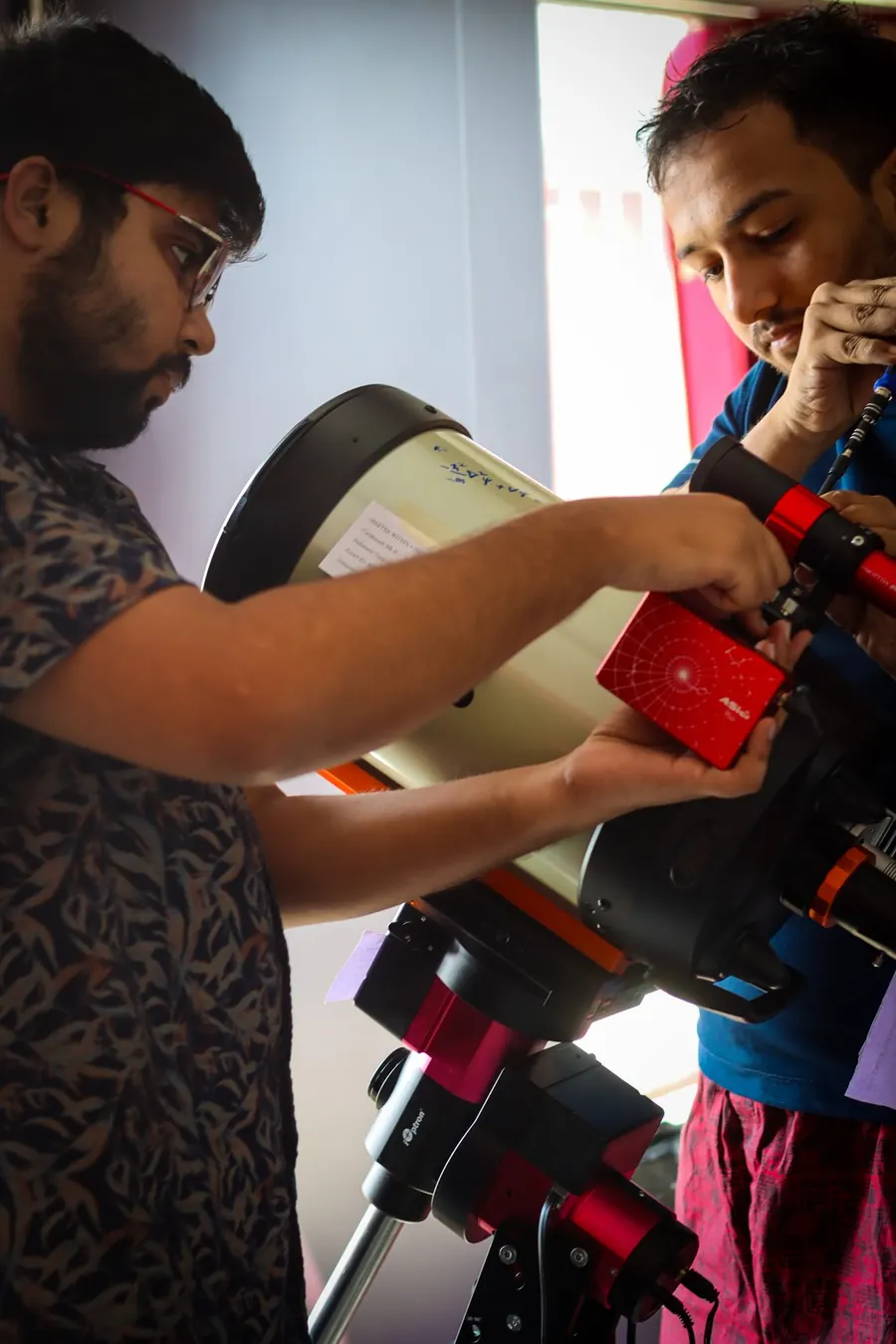
How it came together
Why it exists
“Purākaash is not only designed for celestial observation but also stands as a symbol of Sree Sree Thakur Anukulchandra’s vision — where science and spirituality converge, guiding us to study universal laws, consciousness, and cosmic order as an integral system.”
It is meant to be a hands-on classroom for students, an instrument for public observing, and a training ground for future researchers. It is privately owned and was built with a patron’s support.
Where it stands
The instrument is assembled and working as one system. Its images of the sky, and observing sessions for students, come next.
Instruments, case by case
Custom telescope systems and integration projects are discussed case by case. Write to founder@vishwavigyan.com with your observing goals, location and existing equipment.
Projects